QR pages for tattoos, memorials and everyday objects
Do not tattoo a dead link. Linkink gives a permanent QR tattoo one stable address while its hosted page, links and redirects stay editable. The physical code can remain the same while the content behind it changes with your work, music, portfolio, memorial, booking or next project.
Create a free QR page, use the QR code tattoo generator, calculate QR tattoo module size, run a reproducible scan test, or read the complete QR tattoo guide.
Choose what your QR opens
Keep one physical QR and update the page behind it. Choose a guide or template for the place where people will scan it.
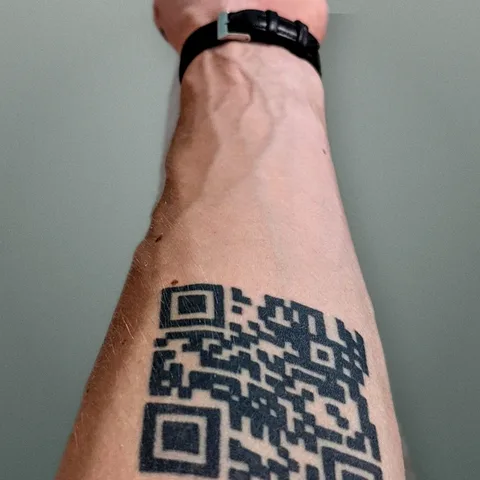
Built from a real QR tattoo
Linkink began with founder Nikita Gromyko's own QR tattoo. The ink cannot be edited, but the page it opens needs to change with new links and projects. That is why the product separates one stable physical QR address from its editable destination. The same experience shapes the guidance: preserve the grid, test the exact print and stencil, retest after healing, and never treat a tattoo QR as guaranteed or maintenance-free. Read the real QR tattoo case study.
Static vs dynamic QR tattoo
A static QR permanently contains its final social, portfolio or campaign URL. If that page moves, the tattoo cannot be edited. A dynamic setup contains one stable route instead, allowing the hosted page or redirect behind it to change later. The route still depends on the provider and domain remaining available.
Editable hosted page
Update links, socials, music, booking, portfolio work, memorial notes, events or contact details after the QR is already tattooed or printed. Linkink hosts the page and HTTPS route, so the basic workflow does not require a separate domain, DNS setup, SSL certificate or web server.
Tattoo-safe QR preparation
Use a short route, strong black-and-white contrast and a clear quiet zone. Print the exact export at final size, scan it with several phones, and test the applied stencil on the intended placement before tattooing. No design, artist or service can guarantee that every healed tattoo will scan forever.
Direct redirect or full page
Open a hosted profile when visitors need several choices, or point the stable QR route directly to one current destination. Move between a page and a redirect later without changing the encoded address. This is useful when a launch, booking link or current campaign changes over time.
Scan tracking and testing
Aggregate scan activity helps confirm that a physical route is being opened. Tracking cannot repair distorted modules, missing quiet zone or poor contrast, but it can verify real use. Always scan the final physical result, not only the digital file, and repeat the check after a tattoo has healed.
Long-term failure planning
A QR can fail because its geometry is damaged or because its destination disappears. Keep a readable fallback URL when possible, avoid temporary campaign links in permanent ink, maintain a basic destination page and periodically scan both the code and the page it opens.
Templates for physical QR use
Start with layouts for tattoo studios, contact cards, pet tags, lost items, events, musicians, portfolios, memorial pages and local businesses. Replace every placeholder, keep the primary action clear and test the complete mobile journey before distributing the QR.
Plans for real use
Start with one free editable QR page. Paid plans add more pages, direct redirects, custom presentation, analytics and higher-resolution export workflows. Lifetime is a one-time option for one QR tattoo for the lifetime of the Linkink service, subject to the Terms of Use.
QR tattoo page questions
Can the destination change after the tattoo is done?
Yes, when the tattoo contains a stable dynamic route. Edit the hosted page or redirect behind that route; the physical modules in the tattoo remain unchanged.
Does Linkink guarantee that a QR tattoo will scan?
No. Reliability depends on size, contrast, quiet zone, placement, stencil transfer, execution, healing and camera conditions. Test before ink and retest after healing.
Do I need to buy hosting or a domain?
No for the standard Linkink workflow. The stable route, hosted page, redirects and HTTPS are included. Long-term availability remains subject to the service and its Terms of Use.